
At ISWS, we have the privilege of working with practitioners from across the UK (and sometimes beyond), and we regularly see examples of amazing practice. As part of our commitment to raising the profile of good social work, we are launching a monthly series to share direct work tools and ideas that can be used by social workers nationwide.
In this month’s edition, we have an ecomap tool developed by Zahraa Adam, independent social worker, specialising in working with separated migrant young people. If you are working with a young person who enjoys playing and/or talking about football… you might want to check this one out!
Statutory processes and assessments frequently ask young people deeply personal questions about their family and social networks which can feel insensitive, intrusive and at times re-traumatising. This is especially true for separated young people who are likely to have experienced loss, bereavement (and of course separation) due to war, persecution or human rights violations. It’s therefore important that we approach these conversations sensitively and in ways that are accessible and trauma informed.
For one football obsessed young person, we used football metaphors to map out the important people in his life; “his team”.
I created a football pitch using a cardboard box, some fake grass and wrapping paper to represent a crowd.
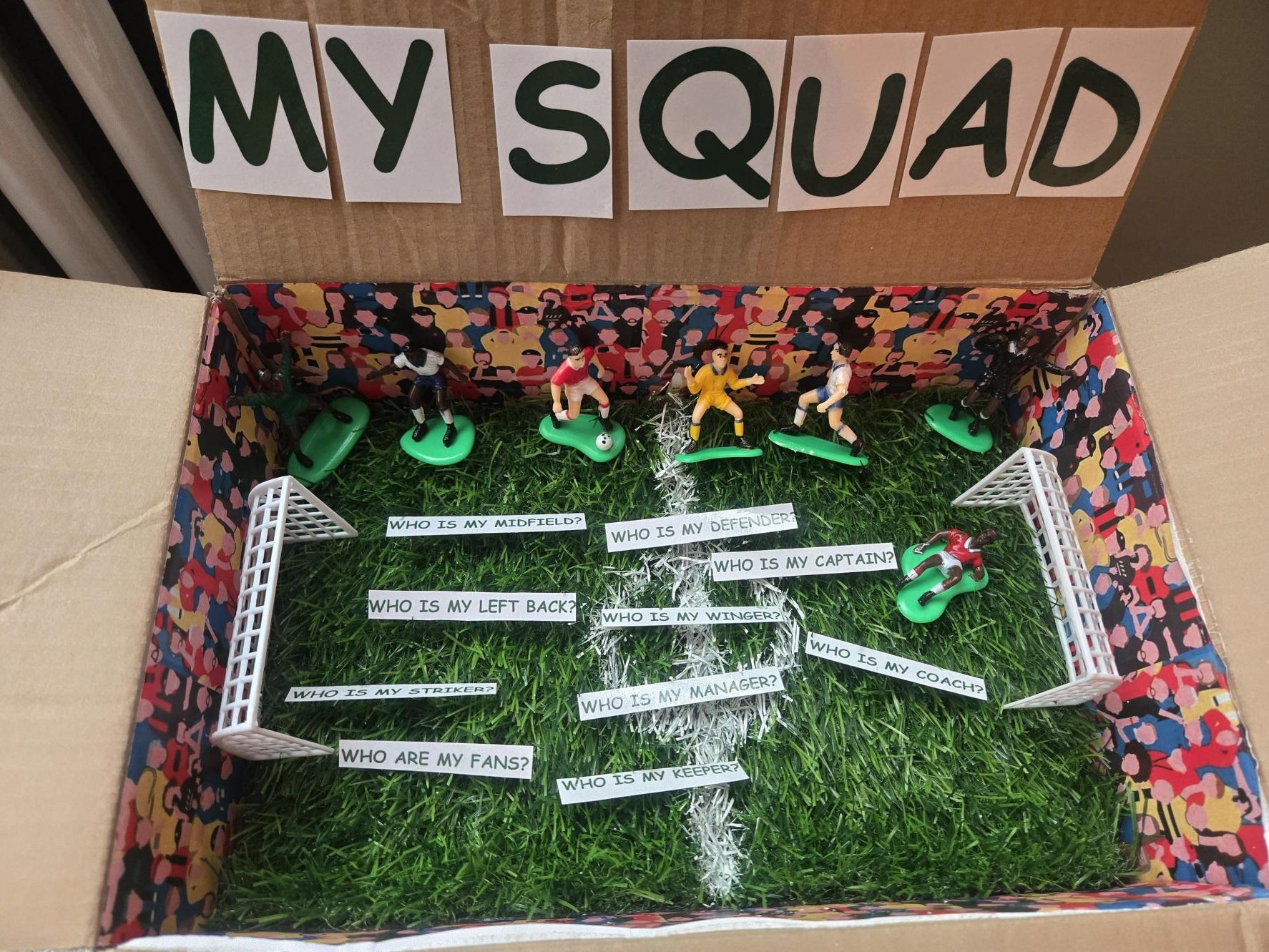
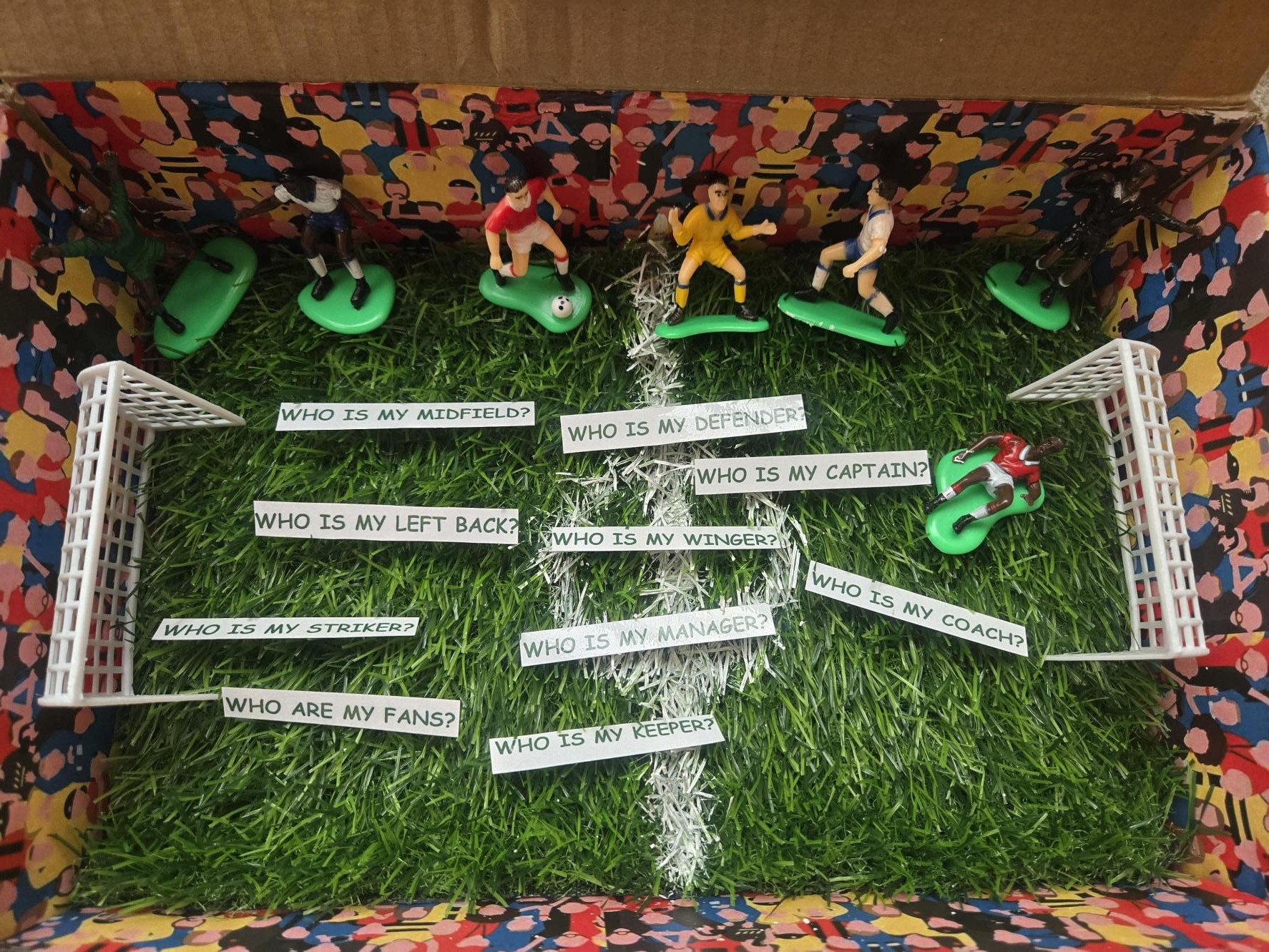
I added in some plastic goals and players and we mapped out his team asking;
This approach allowed him to talk about relationships, safety, and support in a way that felt familiar, playful and emotionally manageable without the intensity of direct questioning.
This was a powerful tool that opened up conversations with the young person that meant I could gather the information I needed, and he shared information in a way that felt comfortable for him.
If the young person needs additional guidance you can give some prompts
Creative ecomaps ican be a flexible, trauma‑informed tool that can strengthen a wide range of statutory and non‑statutory processes. Whether you’re completing a Child and Family Assessment, undertaking an age assessment or building rapport through early “getting to know you” sessions, football‑based mapping offers a gentle, culturally adaptable way for young people to share who matters to them and why. By shifting the focus from direct questioning to metaphor, movement and play, practitioners can gather rich relational information while protecting emotional safety, reducing power imbalances and honouring the young person’s pace. The tool supports us to meet children and young people where they are, which will ultimately create space for a deeper understanding and more meaningful assessment.
If you have a tool or resource you love to use, or if you’d like to submit an idea for future editions, we’d be delighted to hear from you. Please get in touch here