
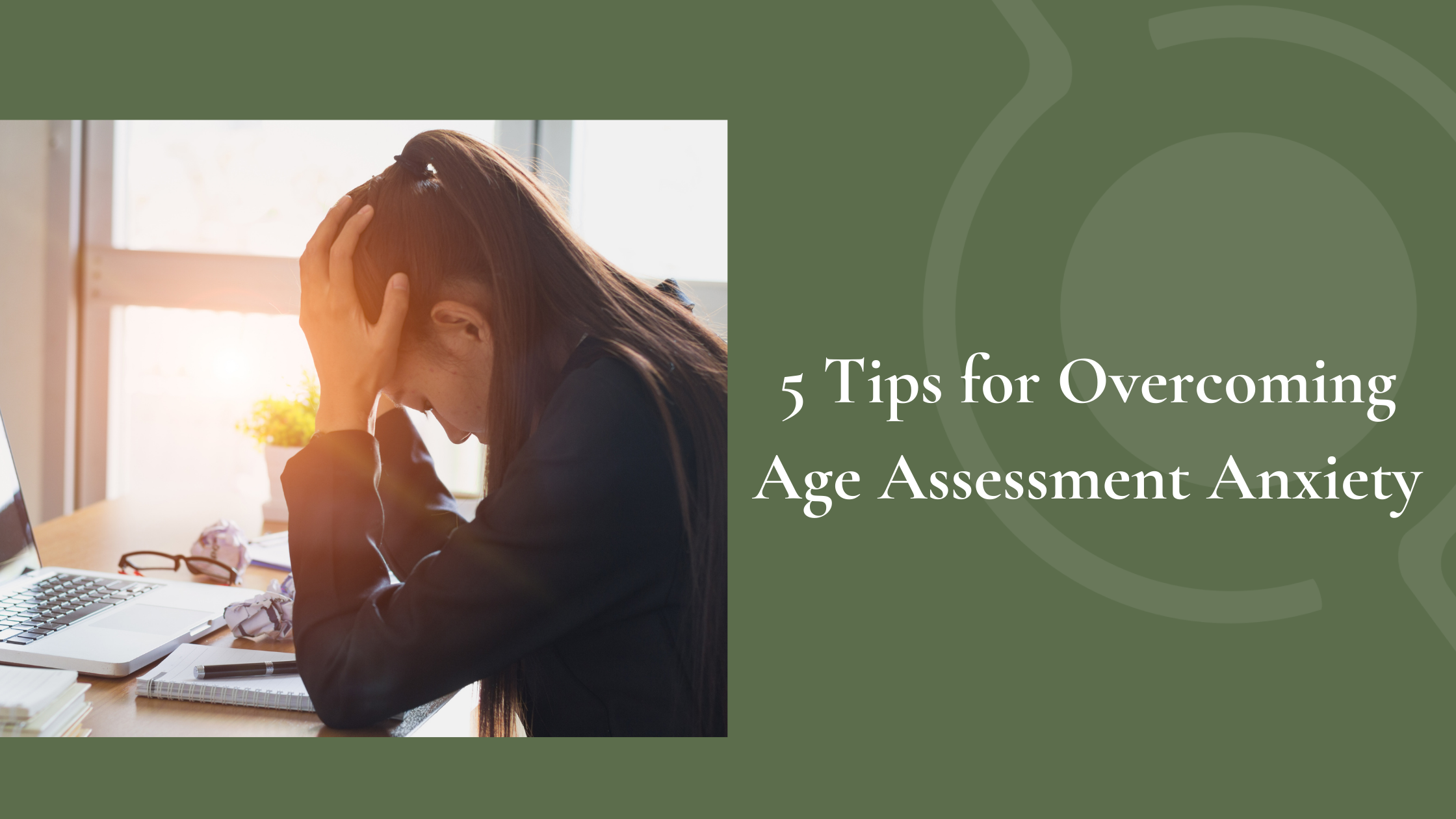
One of the things that I have noticed during my time training, is that lots of social workers experience anxiety at the thought of having to complete an age assessment. There appear to be a number of reasons for this that can include:
* Feeling unsuitably qualified
* Worrying about a lack of cultural awareness and making uninformed assumptions
* Worrying about getting the assessment wrong
* Feeling conflicted with their moral values at having to undertake the assessment
* Feeling under pressure to change the date of birth due to another professionals opinion
These feelings are fed-back frequently and lead to both anxiety and avoidance of the process, neither of which are beneficial to the young person being assessed. So how do we overcome this?

1. Understanding that there are no fixed set of questions that will enable you to come up with an accurate date of birth.
A common misconception in circulation is that there is a set of arranged questions that can lead to an accurate date of birth for an individual, that is different to the age already assigned. Please let me reassure you now, that there is no way to accurately determine someone’s exact date of birth, and I’m here to give you permission to take that pressure off yourself. Medical professionals have long since stated that they are only able to accurately determine age within a window of 5 years using all the latest science and technology, so there is very little chance that social workers, armed with paper, pens and a google map printout, are going to get any closer than that. Remove that pressure and accept your limitations.
2. Your job is to explore, not investigate.
If we accept point 1, that it is going to be nigh on impossible to accurately determine a different date of birth to the one stated, then we need to give ourselves permission to explore, rather than investigate. At the heart of all age assessments, is the belief that the claimed age is incorrect. If we start from a place of disbelief, this is going to impact on how we frame questions and we are more likely to end up in investigation/questioning territory. Many years ago it wasn’t unusual for social workers to approach an assessment of age by asking the same question, in different ways in an attempt to “trip the young person up” and cast doubt on their credibility. Thankfully, this approach is no longer common practice and I am here to remind you that it is not your job to investigate. The age assessment (if you have to do one – see point 5!) should be an exploration of a life story, that supports you to work alongside the young person to better understand how they have arrived at their date of birth.
3. An age assessment is just an assessment – treat it as such.
Age assessments take the form of any other assessment. To put it simply, we gather information, we analyse it and we draw conclusions based on the information we have available at the time.
Gathering information is key, and there are a number of ways in which we can achieve this, even for young people that are newly arrived. We wouldn’t dream of completing a Section 47 assessment without input from other agencies, and the same goes for an age assessment, you don’t have to do it alone.
Your young person will be having contact with professionals from the point of arrival, and it is definitely appropriate to ask them their opinion on the young person’s development and whether this is in line with their age. Foster carers, residential support staff and support workers can be a wealth of knowledge in this field so use them to support your assessment. As long as you check your evidence (is this assumption/fact/opinion) then you can start to build a picture before you’ve begun the assessment.
4. The case law is there to support your work, not make it more difficult.
One of the differences between age assessments and other assessments, is that they are heavily scrutinised in court, and it’s the threat of judicial review that lead social workers to feel anxious. But we have access to case law and can use it to support the work we are doing.
For anyone that has sat and read the Merton Judgment (for those new to this work, this is the case law that originally determined how age assessments should be completed) you will see that all the recommendations are just good social work practice. The subsequent Kent ruling handed down in 2019 takes that a step further and lists the things that you will need to do as part of your assessment.
For example;
* You will need to explain to the young person the purpose of the assessment
To me, this is just good social work practice. We would not approach any other type of assessment without explaining what the purpose of the assessment was, and the same goes for age assessment.
The trick in using the case law, is to make sure that you have written down what you did. So, to use the example above, when you are writing up your age assessment, record that you:
a) explained the purpose of the assessment to the young person
b) how you did this and
c) how you made sure the young person understood.
If you read the case law, apply it in your work and then write that you did it, your assessment will be case law compliant and more robust to legal challenge.
5. Ask yourself, do I need to do this assessment in the first place?
Finally, there are a variety of reasons why social workers are asked to undertake age assessments, but at the heart of all of these, is that when we are completing age assessments, we are doubting the validity of the claimed date of birth that has been given. It’s an oppressive piece of practice (one child to four professionals in a room) and therefore we should avoid this if we can. Of course, there will be occasions where it is absolutely right and correct that we undertake this work, but arguably, there are more occasions when there is absolutely no need as the outcome will not justify the means. So check your reasons for going ahead with the assessment, do we need to do this work, can it wait and what is the pressure behind this? If you ask yourself these questions and conclude that the end justifies the means, write so in your assessment to evidence that you’ve considered this, it will be well received in the event that the assessment ends up in court.
ISWS Ltd offer a range of training including age assessment. If you’d like to know more please get in touch